Helping scientists manage inventory without spreadsheets
Estimated 5 min read
CONTEXT
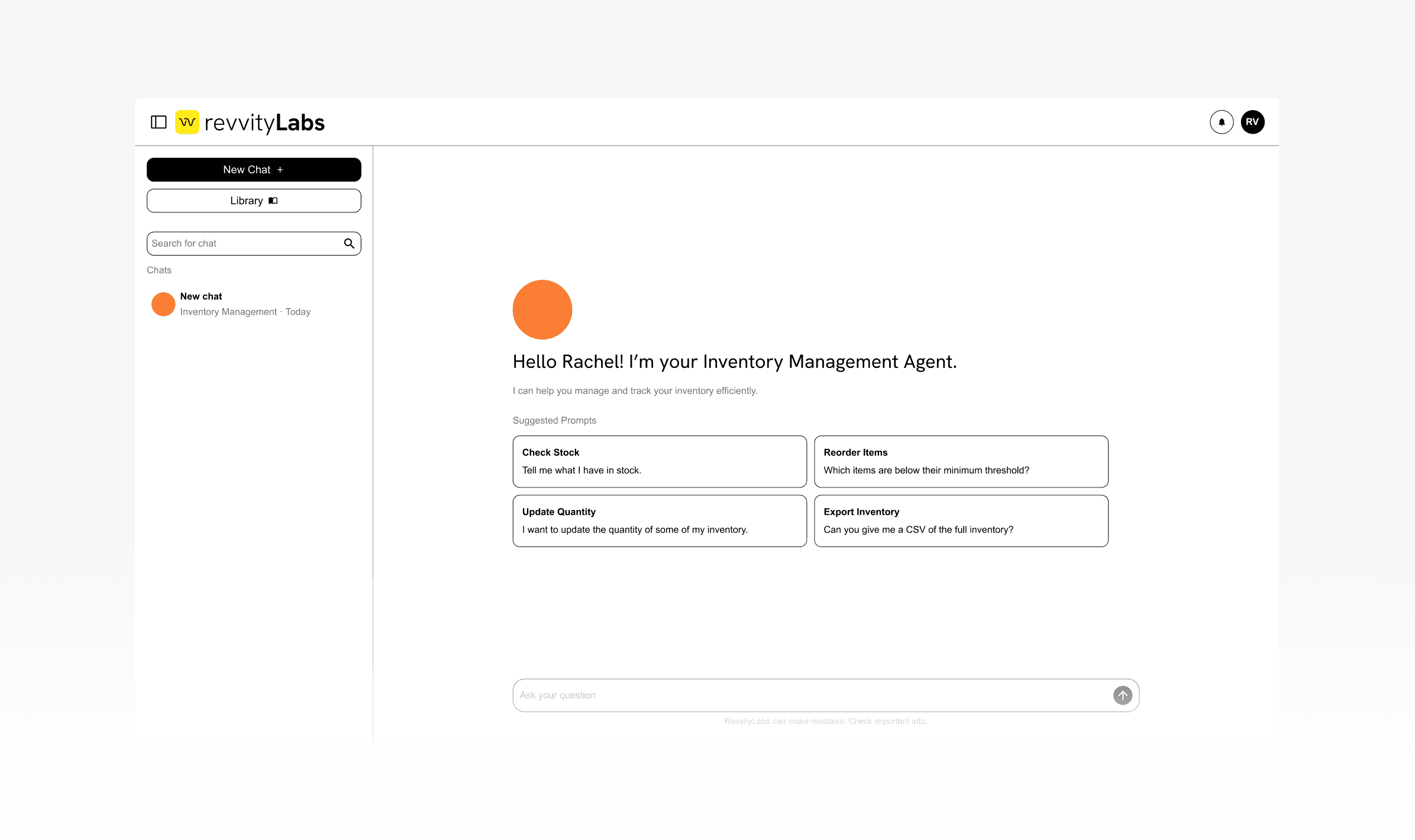
RevvityLabs is an AI-driven SaaS platform helping scientists automate repetitive tasks, streamline workflows, and keep teams connected in secure, science-tuned environments.
OVERVIEW
Throughout this project, I was responsible for user research, workflow mapping, and UI design for the Inventory Management Agent, collaborating closely with scientists, product managers, and engineers.
MY ROLE
UX Research, Interaction Design
TIMELINE
1 Months (July 2025)
TEAM
1 Designer, 1 Product Manager, 2 Engineers
CURRENTLY...
Many labs still rely on spreadsheets and manual tracking, making it hard to stay organized or plan ahead.
As part of RevvityLabs, an AI-driven platform aimed at modernizing lab workflows, I focused on designing the Inventory Management Agent. The goal was to help labs move from ad-hoc tracking to a more proactive, reliable system — without disrupting how teams already work.


PROBLEM
Inventory management in labs is fragmented and inconsistent.
As a result, scientists spend time managing inventory instead of focusing on their work.

Each lab maintains its own spreadsheet structure

Re-ordering depends on memory rather than signals

Updates are manual and easy
to forget

There’s no clear source of truth
How might we create an intuitive, reliable way to understand and manage inventory in real time — without adding more tools or overhead?
WHO WE DESIGNED FOR
Primary Users
Secondary Stakeholders
Internal operations teams & product and engineering partners.
This project required balancing user needs with technical feasibility and operational constraints.

LAB MANAGER
Responsible for tracking and re-ordering supplies

SCIENTIST
Looking for quick visibility into available inventory
DISCOVERY
Workflow mapping with real labs
I worked closely with lab managers from external labs and internal scientists to map how inventory is currently handled. Here’s what we observed:
These sessions helped identify where AI could meaningfully reduce friction instead of introducing complexity.

Inventory workflows vary widely between labs

Issues are discovered too late, often after stock runs out

Excel is deeply embedded and not going away

Existing tools don’t support quick questions or visibility
To narrow the scope, I re-framed the challenge. This question guided prioritization and design decisions throughout the project:
How might we help labs manage inventory proactively without disrupting existing workflows or adding cognitive load?
SOLUTION
We designed the Inventory Management Agent, an AI-powered tool that layers intelligence on top of existing systems rather than replacing them.

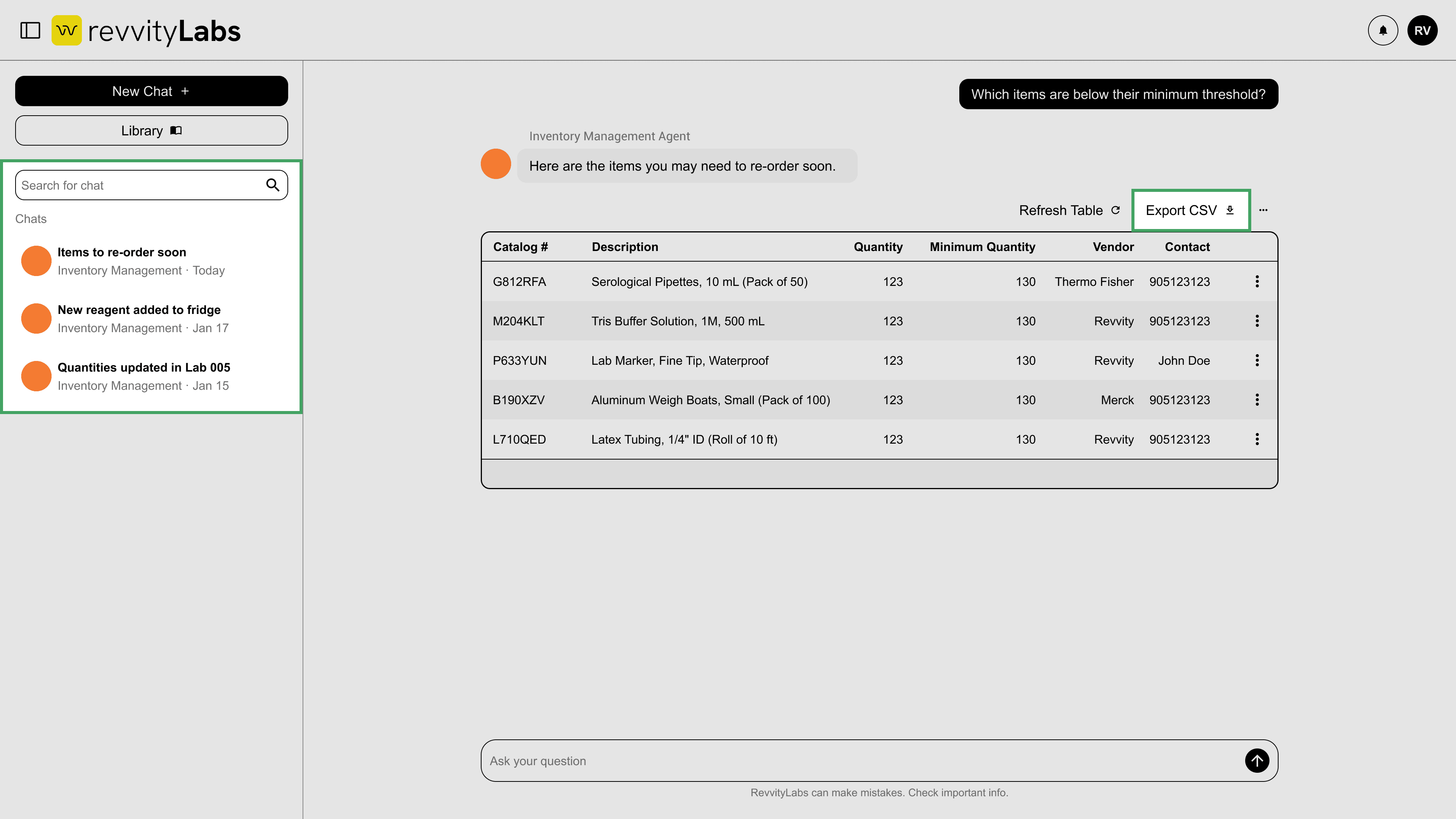
Talk to your inventory using natural language
Ask simple questions and get immediate answers — without digging through spreadsheets or dashboards.
Import existing spreadsheets
Bring existing inventory data into the system without restructuring or starting from scratch.
Proactive notification system
To relieve the reactive burden.
Export inventory data as CSV
Easily share or document inventory data outside the platform.
IMPACT
Re-framed inventory management as a supportive system rather than a maintenance burden
Even pre-launch, the Inventory Management Agent shifted how the team related to inventory entirely. By centralizing tracking and removing the mental load of memory-based reordering, the system transformed inventory management from a daily burden into a reliable, self-sustaining process — freeing the team to focus on growth rather than maintenance.
RETROSPECTIVE
Good AI design supports workflows rather than reshaping them
especially in environments where accuracy and trust matter.
Designing the Inventory Management Agent pushed me to think beyond individual screens — balancing user needs, technical feasibility, and long-term product direction. It strengthened my interest in building thoughtful, human-centered tools that help people focus on work that truly matters.


The End
Interested in teaming up?